Customer self-service and e-commerce.
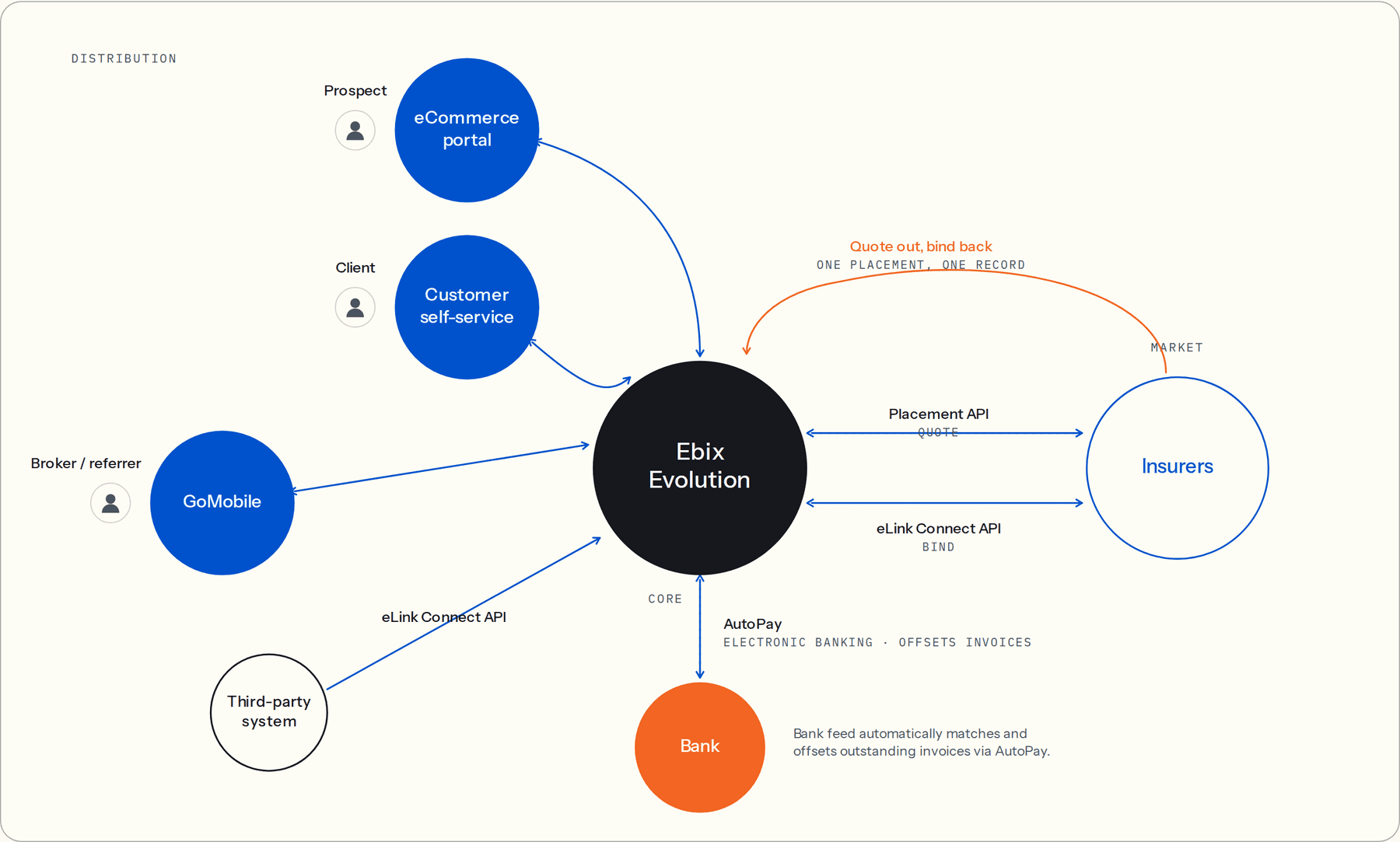
Clients view policies, claims, and balances, request certificates, and lodge first notice of claim online, and online products let them quote, bind, and pay without broker intervention, with every transaction landing in the broking system as if your staff had keyed it.
customer self-service
What clients can do themselves
Insurance has lagged banks in the use of web technology. Ebix Customer Self-Service changes that, using web solutions Ebix has built for some of the world's leading insurance organisations.
Policy details
Clients view their own policy details online, the way they check a bank balance.
Claim status
The status of a claim, without a call to the broker.
Account balances
Their own account information and balances from the broking system.
Reprints and certificates of currency
Requests for reprints of broking system documentation and certificates of currency, served from the record.
First notice of claim
Clients lodge first notice of claim online, and it lands on the policy in Evolution.
Contact their broker
A direct line to the broker from inside the portal.
You decide what is exposed
Functionality can be extended so clients actively manage aspects of their insurances. Importantly, the brokerage decides what self-service provides.
One-way, secure feed
Web-service technology provides selected policy, claims, and accounting information without exposing your database or compromising security.
E-commerce, end to end
EbixEvolution was designed from the ground up as an e-commerce enabled platform for product distribution. Here is what happens when a client buys online.
Product on your website
Online insurance products distributed through standard e-commerce websites or specialist facilities: a retail client website or a niche market distribution facility.
Client quotes, binds, and pays
The client generates a quote, binds cover, and pays for the policy without broker intervention.
Transaction lands in Evolution
It appears as if it had been manually entered by your staff. The broking system remains the sole repository for policy and accounting information.
Documents and settlements follow
Invoices and documentation are generated from within the broking system, and insurer settlements and reports include the imported transactions.
Payments receipted automatically
Payment files from your bank or card provider upload into Evolution automatically, negating manual receipting.
Inside the module
The client portal and the transaction it produces in the broking system.
The client portal
Policy details, claim status, account balance, document requests, and first notice of claim, under the brokerage's brand.
- Policies, claims, and balances
- Certificates of currency on request
- First notice of claim online

The transaction in Evolution
An online sale lands in the broking system as a normal policy and accounting transaction, with its invoice and documents generated inside Evolution.
- Sole repository for policy and accounting
- Invoices and documents from the system
- Included in settlements and reports
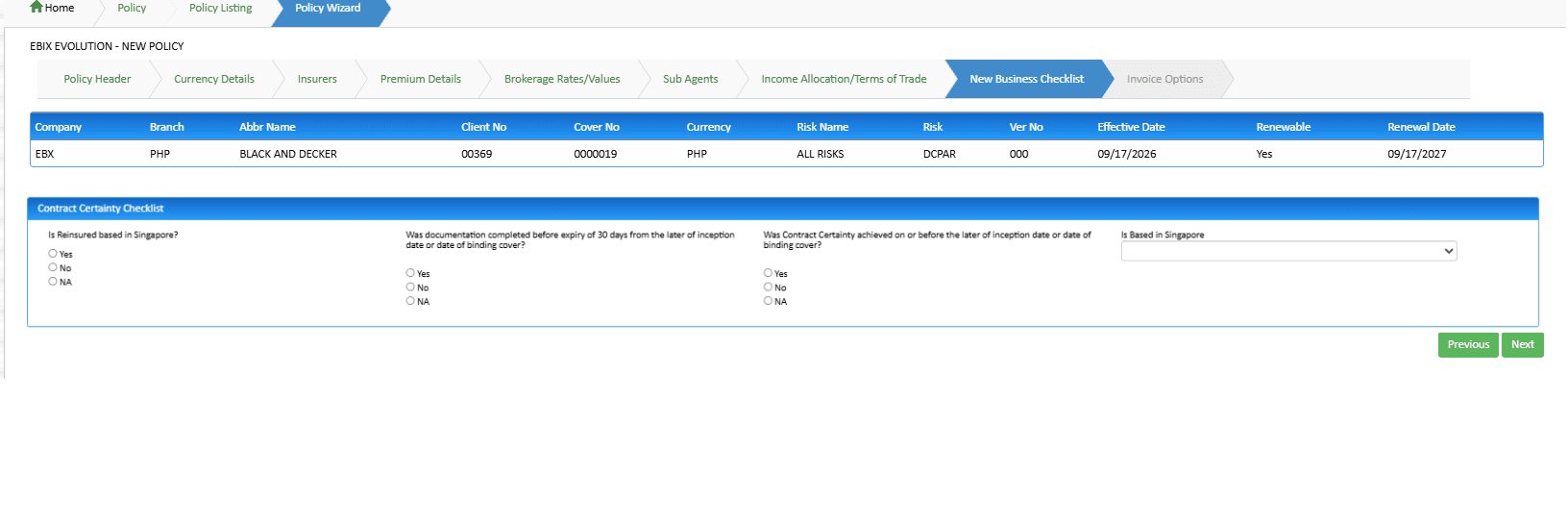
Actual product screens, shown as configured and white-labeled for RedGram Wealth Management, an investment advisory firm running on Ebix Meridian. Your firm gets the same portal under your own brand.
Illustrative screens · EbixEvolution captures to follow
Why it stays one system
Most e-commerce bolt-ons create a second book. Evolution's does not: the online sale is a broking transaction from the moment it happens.
Policy and accounting information for online sales live in the broking system.
Bank and card payment files upload automatically.
Insurer settlements and reports include the imported transactions.
Self-service is a one-way web-service feed; the brokerage decides what is shown.
Put a product
on your website
See a client quote, bind, and pay online, and watch the transaction appear in the broking system.