Claims handler reviewing documents
Ebix Meridian

Claims on the policy they arose under.

Track claims in EbixEvolution from first notice to close, on the policy and client record they belong to, with adjusters, reserves, correspondence, and documents filed on the claim.

the module, end to end

First notice to close

A claim is the moment the client finds out whether the brokerage was worth it. The module is built to keep the file complete and the chasing on time.

01

First notice of loss

The loss is recorded against the policy the day it is reported, with claimant, loss date, and circumstances captured on the claim record from the first call.

02

Tied to the policy and client

Each claim belongs to the policy it arose under and the client that holds it, so loss history reads in context alongside the rest of the file.

03

Insurer notification

The notification goes to the insurer from the claim record, and the acknowledgment and claim reference are filed back onto it.

04

Adjusters and third parties

Loss adjusters, repairers, solicitors, and other parties recorded on the claim, with their correspondence logged against it.

05

Reserves and payments

Estimates, reserves, and payments tracked on the claim so the client and the brokerage know where it stands.

06

Correspondence and documents

Every letter, email, photograph, and report filed on the claim record, and kept there after the claim closes.

07

Diary and chasing

Follow-ups with the insurer and the adjuster as dated tasks, so an open claim never goes quiet by accident.

08

Claims history at renewal

The loss history for the policy and the client available on the file when terms are re-invited at renewal.

The claim, step by step

Four stages, all on one record.

01

First notice

The loss is reported and recorded on the claim record, tied to the policy and the client from the first entry.

02

Insurer notified

The notification goes from the record, and the insurer's acknowledgment and reference come back onto it.

03

Managed to settlement

Adjusters, reserves, payments, and correspondence tracked on the claim while it is open.

04

Closed, history kept

The claim closes with its documents intact, and the loss history is there at the next renewal.

Inside the module

The claims desk and the client file as the claims team sees them.

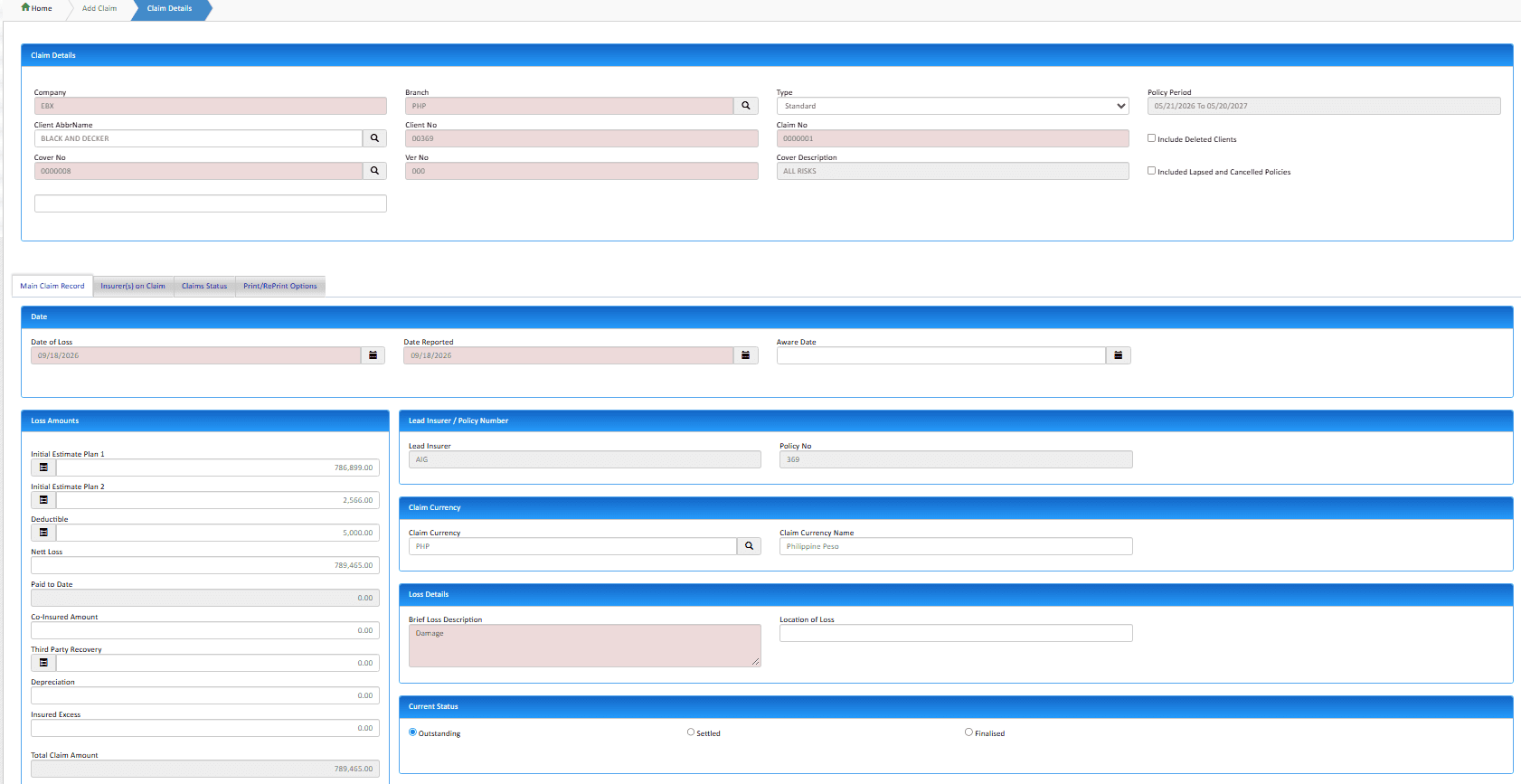
The claims desk

Open claims by handler, insurer, and age, with the next action and its due date on each, so nothing goes quiet.

  • Open claims by handler and insurer
  • Next action and due date on every claim
  • Ageing at a glance
ebixevolution.com/claims
Claims desk

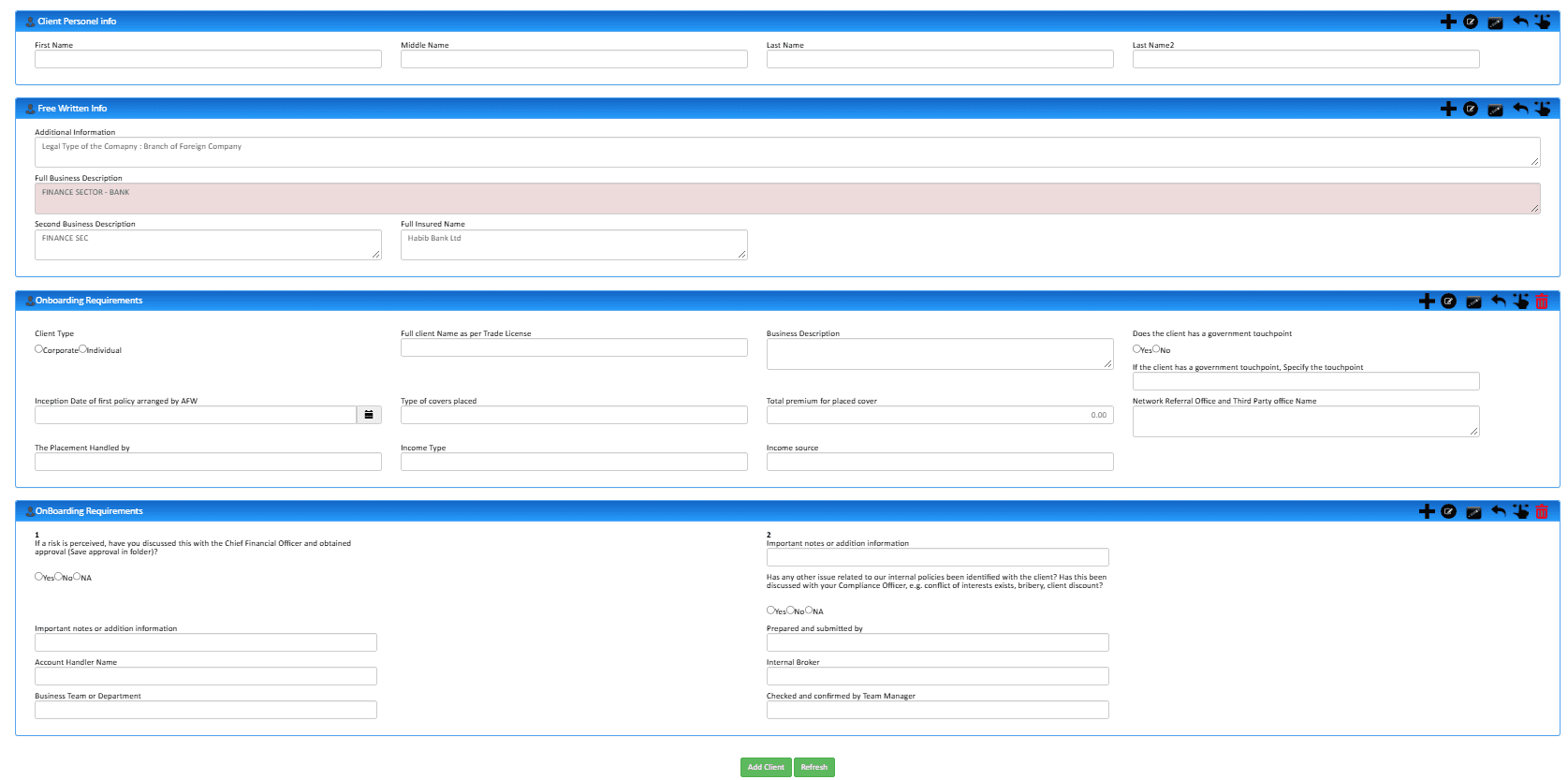
The claim on the client file

The claim sits on the client file beside the policy it arose under, so service staff see it without opening a second system.

  • Claim visible on the client file
  • Linked to the policy and section
  • Loss history at renewal
ebixevolution.com/clients
Client file with claims

Actual product screens, shown as configured and white-labeled for RedGram Wealth Management, an investment advisory firm running on Ebix Meridian. Your firm gets the same portal under your own brand.

Illustrative screens · EbixEvolution captures to follow

Why the claim lives on the policy

Claims kept in a separate system get separated from the cover, the client, and the history. On EbixEvolution the claim is part of the policy record, which changes what the brokerage can see and do.

Cover checked against the loss

The section, limits, and excess are on the same record as the claim.

History at renewal

Loss history for the policy and the client is on the file when terms are re-invited.

Service staff can answer

Anyone on the client file sees the claim status without asking the claims team.

Reporting without exports

Claims by insurer, class, and client come from the same data model as everything else.

See a claim
from notice to close

Walk through a real claim in the demo and see how the file, the insurer, and the client stay in step.